
When people search for a dentist near me, they are usually looking for more than a routine cleaning. They want a dental office they can trust with their comfort, long-term oral health, and the needs of everyone in the family. They want answers that are clear, treatment that feels personal, and a team that can help whether the issue is preventive, restorative, or cosmetic.
At Gentle Touch Family Dentistry, patients in Lathrup Village, Michigan, and nearby communities such as Detroit, Farmington Hills, Novi, Oak Park, and Southfield often come in with the same big questions. Why are my gums bleeding? Do I need a periodontist? When is an oral surgeon involved? Is a crown enough, or is a dental implant the better option? These are important questions because oral health is connected to comfort, appearance, confidence, and quality of life.
This guide explains the basics in plain language. It covers how gum disease and periodontal disease develop, when a periodontist or oral surgeon may become part of your care, how tooth crowns help restore damaged teeth, and why dental implants are often considered a durable solution for missing teeth. It is designed for patients who want to understand their options before scheduling a visit and for families looking for a dependable dental home in the Lathrup Village area.
Why comprehensive dentistry matters
A healthy smile is not built around one treatment. It comes from a combination of prevention, early diagnosis, restorative care, and personalized follow-up. A family dental office is often the starting point for all of that. Your dentist monitors changes over time, checks for signs of decay or gum problems, evaluates old dental work, and helps determine whether you need general treatment in-office or referral-based specialty care.
That matters because many dental problems do not begin with dramatic pain. They often start quietly. A small cavity may not hurt until it becomes larger. Gum inflammation may show up only as occasional bleeding when you brush. A cracked tooth may feel “off” long before it becomes an emergency. The earlier these issues are found, the more conservative and predictable treatment usually is.
Comprehensive dentistry also means looking at the full picture rather than one isolated tooth. Your gums, bite, jaw function, restorations, and missing teeth all affect one another. A patient who loses a tooth may later notice shifting teeth or changes in chewing. A patient with untreated periodontal disease may risk losing support around otherwise healthy teeth. A patient with a weakened molar may avoid a crown for too long and end up needing a more complex restoration later.
For that reason, the best dental care is rarely reactive. It is proactive, personalized, and built around prevention first, then timely treatment when needed.
Searching for a “dentist near me”: what patients should really look for
The phrase dentist near me is one of the most common dental searches online, but convenience should be only one part of the decision. Location matters, yes. So does scheduling. But the real value comes from choosing a dental practice that explains treatment clearly, respects your comfort, and can guide you through both routine and more advanced care.
A strong dental home should offer several things:
First, it should feel patient-centered. That means the team takes time to listen, explain findings, and tailor care rather than pushing one-size-fits-all recommendations. Patients of different ages and dental histories need different approaches.
Second, it should focus on prevention as much as treatment. A quality office does not just fix problems after they become expensive. It helps patients reduce the chance of future issues through exams, cleanings, home-care guidance, and early intervention.
Third, it should know when specialty care is appropriate. Not every office performs every procedure, and that is fine. What matters is good judgment. A dentist should know when a patient may benefit from seeing a periodontist for advanced gum concerns or an oral surgeon for surgical treatment, extractions, or implant-related care.
Finally, it should make patients feel comfortable. Dental anxiety is common. A warm, respectful environment can make a major difference in whether people keep up with routine care or wait until a problem becomes urgent.
For families in and around Lathrup Village, that combination of skill, communication, and comfort is often what turns a one-time appointment into a long-term relationship.
Gum disease and periodontal disease: why early signs should never be ignored
Many patients use the terms gum disease and periodontal disease interchangeably, and in everyday conversation that is usually fine. Gum disease is a broad term that includes conditions affecting the tissues around the teeth. The mildest form is gingivitis, which commonly involves redness, swelling, or bleeding gums. When the condition progresses and begins affecting deeper supporting structures, including bone, it is known as periodontitis. Current patient guidance from the CDC, ADA, and the American Academy of Periodontology emphasizes that gingivitis is the mildest stage, that it can be reversible with good oral hygiene and professional care, and that periodontitis may require more involved treatment.
That distinction matters because patients often ignore the early warning signs. Bleeding gums are sometimes treated as normal, but healthy gums generally should not bleed regularly during brushing or flossing. Other possible symptoms include tenderness, persistent bad breath, gum recession, tooth sensitivity, loose teeth, or a change in how the teeth fit together when biting down. Some people notice almost nothing at all until the disease is more advanced.
The challenge with periodontal disease is that it can progress quietly. By the time discomfort becomes obvious, tissue damage may already be more significant. That is one reason routine dental visits are so important. Dentists and hygienists are often able to spot inflammation, pocketing, or recession before patients realize how much has changed.
What causes gum disease?

The short version: plaque and bacteria are the main drivers, but the full story is more complex. When plaque is not removed effectively, it can contribute to inflammation in the gums. Over time, that inflammation can affect the tissues and bone that support the teeth.
However, not everyone has the same risk profile. According to patient-focused guidance from the AAP and CDC, risk factors can include smoking, age, diabetes, oral hygiene habits, and other overall health factors. Smoking is a particularly important risk factor for severe gum disease.
This is why dental care should be individualized. Two patients can have similar brushing habits but very different periodontal risk depending on their medical history, tobacco exposure, genetics, dry mouth, or existing inflammation. That is also why online advice has limits. A quick search may tell you the basics, but it cannot replace an exam that looks at your specific gum condition.
Why untreated periodontal disease affects more than your gums
Patients often think of gum disease as a minor issue because it starts in soft tissue. In reality, untreated periodontal disease can have serious consequences inside the mouth. It may lead to gum recession, bone loss, tooth mobility, bite changes, and eventually tooth loss. Once support around a tooth is compromised, treatment can become more complex and more costly.
There is also growing public awareness of the relationship between oral health and overall health. The ADA and CDC note that periodontal disease shares important risk factors with broader health conditions and that oral health should not be viewed in isolation from general wellness.
For patients, the practical message is simple: bleeding gums are not something to “watch for a few months and hope for the best.” Early evaluation is usually the smarter move.
When should you see a periodontist?
A periodontist is a dental specialist focused on the prevention, diagnosis, and treatment of periodontal disease, as well as care involving supporting structures around the teeth and implants. The AAP recommends comprehensive periodontal evaluation and emphasizes early identification of gum problems and risk factors.
Your general dentist may recommend evaluation by a periodontist if you have:
- persistent gum inflammation or bleeding
- deep periodontal pockets
- noticeable gum recession
- loose teeth
- bone loss seen on imaging
- gum disease that does not respond well to initial treatment
- implant-related gum concerns
- a complex periodontal history
That does not mean your family dentist stops being involved. In many cases, the best outcome comes from teamwork. The general dentist may continue to manage exams, cleanings, fillings, and restorative care, while the periodontist handles advanced gum treatment or maintenance planning.
For patients, this is good news rather than bad news. Referral to a periodontist does not mean the situation is hopeless. It usually means the care plan is becoming more precise.
When does an oral surgeon come into the picture?
An oral surgeon, or oral and maxillofacial surgeon, focuses on surgical care involving the mouth, teeth, jaws, and facial structures. The American Association of Oral and Maxillofacial Surgeons describes these specialists as experts in face, mouth, and jaw surgery.
A patient may be referred to an oral surgeon for situations such as:
- complex tooth extractions
- impacted teeth
- surgical implant placement
- bone grafting
- certain infections
- pathology involving the mouth or jaw
- facial or jaw-related surgical issues
Not every patient who needs a missing tooth replaced will need an oral surgeon, but many implant cases involve surgical planning. In some practices, the dentist and oral surgeon work closely together: the surgeon places the implant, and the restorative dentist later places the final crown or restoration. In other cases, treatment may happen within a more integrated office setup. The key point is that patients benefit when the right professional handles the right part of the case.
Tooth crowns: when they help and why timing matters
Tooth crowns are one of the most common restorative solutions in dentistry, and they serve an important purpose. A crown, sometimes called a cap, covers and protects a tooth that is weakened, heavily restored, fractured, worn down, misshapen, or cosmetically compromised. Patient guidance from MouthHealthy and NIDCR notes that crowns can strengthen teeth, restore broken teeth, improve appearance, and also cover dental implants.
In practical terms, a crown may be recommended when a filling is no longer enough. For example, if a large cavity or old restoration has left too little healthy tooth structure behind, a standard filling may not provide enough support over time. A crown can help protect the remaining tooth and restore function.
Crowns are also common after root canal treatment, especially on back teeth that handle significant chewing forces. In those cases, the goal is not only to restore the tooth but to reduce the risk of fracture.
Patients sometimes delay crowns because the tooth is “not hurting that much.” That is a risky gamble. A compromised tooth can worsen quietly, and what begins as a manageable restoration may eventually become a crack, infection, or extraction.
A well-planned crown should do more than cover a tooth. It should fit the bite correctly, feel comfortable, and blend with surrounding teeth as naturally as possible. Good dentistry is not just about placing a restoration. It is about restoring confidence in how your mouth feels and functions every day.
Dental implants: a long-term solution for missing teeth
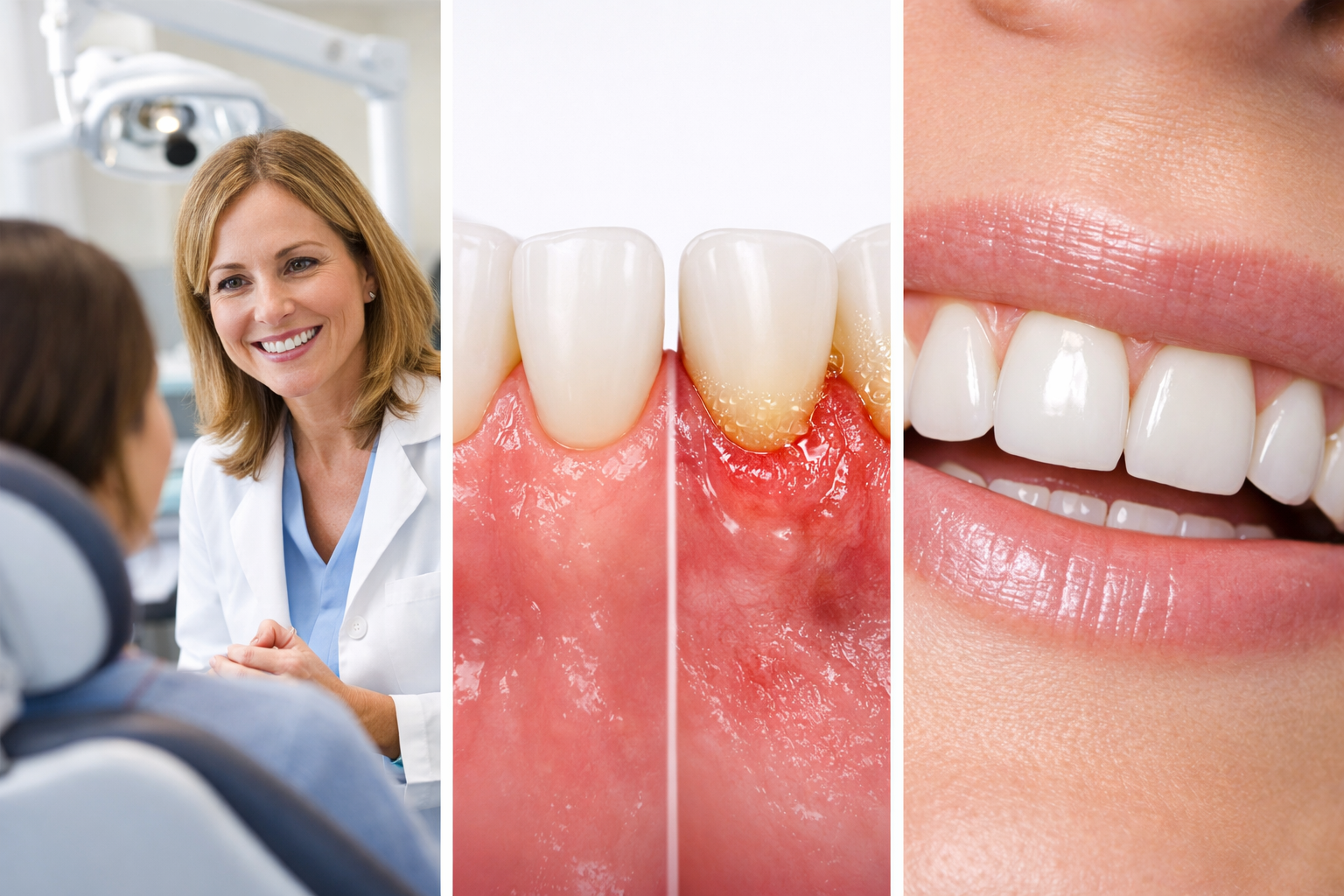
When a tooth is missing, treatment is not only about appearance. Missing teeth can affect chewing, speech, neighboring tooth movement, and the overall balance of the bite. That is one reason dental implants are such an important option in modern dentistry.
A dental implant is placed in the jaw to act as an artificial root, and then a restoration such as a crown, bridge, or denture attachment is connected to it. MouthHealthy explains that for a single missing tooth, the final restoration is often a custom dental crown designed to match the surrounding teeth.
Patients are often interested in implants because they can feel more stable and natural than removable alternatives. They also help avoid placing load directly on adjacent teeth the way some traditional bridge designs might.
That said, implants are not automatic for every patient. A successful case depends on factors such as gum health, bone support, overall oral condition, bite forces, and long-term maintenance habits. This is where proper diagnosis matters. If a patient has active gum disease or uncontrolled periodontal disease, that issue usually needs to be addressed before implant treatment moves forward.
Implants also require maintenance. They are strong, but they are not “set it and forget it.” The gums and supporting tissues around implants still need careful home care and regular professional monitoring.
For many patients, the biggest advantage of dental implants is that they restore both function and confidence. Eating feels easier. Smiling feels more natural. And because the replacement is anchored in the mouth, many people say it feels closer to having their own tooth back.
Can the natural tooth still be predictably saved?
If the tooth is present and has enough healthy structure and support, a crown may be a good restorative option. If the tooth is missing, or if the tooth is too damaged to save predictably, an implant may be part of the discussion.
But that is only the starting point. Dentists also consider:
- how much tooth structure remains
- whether there is infection
- whether the tooth has adequate bone support
- the condition of the gums
- bite forces and grinding habits
- esthetic needs
- long-term prognosis
- cost and treatment timeline
This is why real diagnosis beats internet guessing every time. Patients often search phrases like “do I need a crown or implant?” and hope for a universal answer. Dentistry rarely works that way. The right choice is the one that fits the actual condition of the tooth, gums, and surrounding structures.
The daily habits that protect your smile
Most major dental problems become less likely when the basics are done consistently. The ADA’s current home-care guidance for adults emphasizes brushing twice a day for two minutes with fluoride toothpaste, cleaning between teeth daily, and limiting sugary foods and drinks as part of prevention for caries and gingivitis.
That sounds simple, and it is. The challenge is consistency.
Patients who want to reduce their risk of gum disease, tooth decay, and restorative problems should focus on the following habits:
Brush thoroughly, not just quickly
Two rushed passes across the front teeth do not count as effective brushing. Focus on the gumline, the chewing surfaces, and the back teeth that are easy to miss.
Clean between your teeth every day
This is where many patients lose the plot. Brushing alone does not clean the spaces between teeth well enough. Floss or other approved interdental cleaning tools can make a major difference.
Keep regular dental visits
Routine exams and professional cleanings help catch issues before they become more invasive. They also provide a baseline for tracking changes in gum health, restorations, and bite.
Do not ignore bleeding or sensitivity
Small symptoms often lead to larger treatment when ignored. If something changes, schedule an evaluation.
Watch lifestyle factors
Smoking, frequent sugar exposure, poor sleep habits, chronic dry mouth, and delayed care all raise the odds of dental trouble. Mouths are not magical. They respond to patterns.
What a patient-focused dental experience should feel like
For many people, the hardest part of getting dental care is not the treatment itself. It is the uncertainty before the appointment. Patients worry about pain, cost, judgment, or hearing that everything is worse than expected.
A patient-focused practice changes that experience. Instead of rushing, it educates. Instead of overwhelming patients with jargon, it explains what is happening and why it matters. Instead of treating people like a procedure number on the schedule, it treats them like individuals with different goals, concerns, and comfort levels.
That philosophy matters at every age. Children need positive early experiences. Adults need practical guidance they can trust. Older patients may need more complex planning involving restorations, periodontal maintenance, or replacement of missing teeth.
A true family practice also recognizes that oral health is ongoing. A beautiful smile is not built in one visit. It is maintained through partnership.
Gentle Touch Family Dentistry in Lathrup Village, MI
At Gentle Touch Family Dentistry, Dr. Dana L. Greer and the team serve patients who want personalized care in a warm, relaxed, family-oriented setting. For people looking for a dentist near me in Lathrup Village, the real value of a local dental office is consistency: one place to turn for checkups, cleanings, restorative treatment, smile support, and guidance when specialty care may be needed.
That includes patients dealing with early signs of gum disease, questions about periodontal disease, concerns about damaged teeth that may need tooth crowns, and conversations about whether dental implants, a periodontist, or an oral surgeon may play a role in treatment.
For patients in Detroit, Farmington Hills, Novi, Oak Park, Southfield, and nearby communities, choosing a dental office is about more than geography. It is about trust. It is about having a team that listens, evaluates carefully, explains options clearly, and helps protect your smile for the long term.
Final thoughts
Oral health tends to reward people who act early. A routine exam today can prevent a more complicated procedure later. A conversation about bleeding gums can uncover developing periodontal disease before it causes serious damage. A crown placed at the right time can save a tooth that might otherwise fracture. A thoughtful implant plan can restore comfort and confidence after tooth loss.
That is why searching for a dentist near me should lead to more than an address. It should lead to a relationship with a dental team that sees the full picture of your health and helps you make informed decisions about your smile.
If you are looking for comprehensive, family-friendly dental care in Lathrup Village, Michigan, Gentle Touch Family Dentistry offers a patient-centered starting point for preventive visits, restorative treatment, and long-term oral health support.