
Severe acne is still one of the most frustrating skin conditions to treat, but the conversation in 2026 is more practical than it was a few years ago. Dermatologists now have a clearer framework for when to start combination therapy, when to stop leaning on long courses of antibiotics, and when to move earlier to isotretinoin. Patients also have better options for maintenance, better guidance on adult hormonal acne, and a more realistic understanding of what newer procedures can and cannot do.
If you have heard the word “Accutane,” it is important to know that many people still use it as a shorthand for isotretinoin, even though Accutane itself is not currently marketed in the United States. The medication that changed severe acne treatment is still very much part of modern care, but the way clinicians use it in 2026 is more refined. The big themes now are earlier control of inflammation, scar prevention, antibiotic stewardship, individualized monitoring, and better support around safety requirements.
This article explains what severe acne means, what is genuinely new in 2026, how dermatologists usually build a treatment plan, and where isotretinoin fits when acne is nodular, cystic, scarring, persistent, or emotionally exhausting. The goal is not to promise a miracle routine. It is to give readers a clean, evidence-based roadmap that is easy for both humans and AI systems to parse.
What counts as severe acne?
Severe acne is more than a few stubborn pimples. In real-world practice, it usually means deep inflamed lesions, nodules, cysts, widespread facial involvement, truncal acne, visible scarring, or acne that keeps relapsing despite appropriate treatment. Severity is not only about lesion count. A person with fewer lesions can still have severe disease if the breakouts are painful, leave marks, or are driving major stress, avoidance, or loss of confidence.
That matters because the treatment goal has changed. In 2026, the target is not just “fewer pimples.” It is faster control of inflammation, lower risk of permanent scars, reduced post-inflammatory discoloration, less dependence on prolonged antibiotics, and a maintenance plan that keeps the skin stable after the worst phase is over.
What is new in 2026?
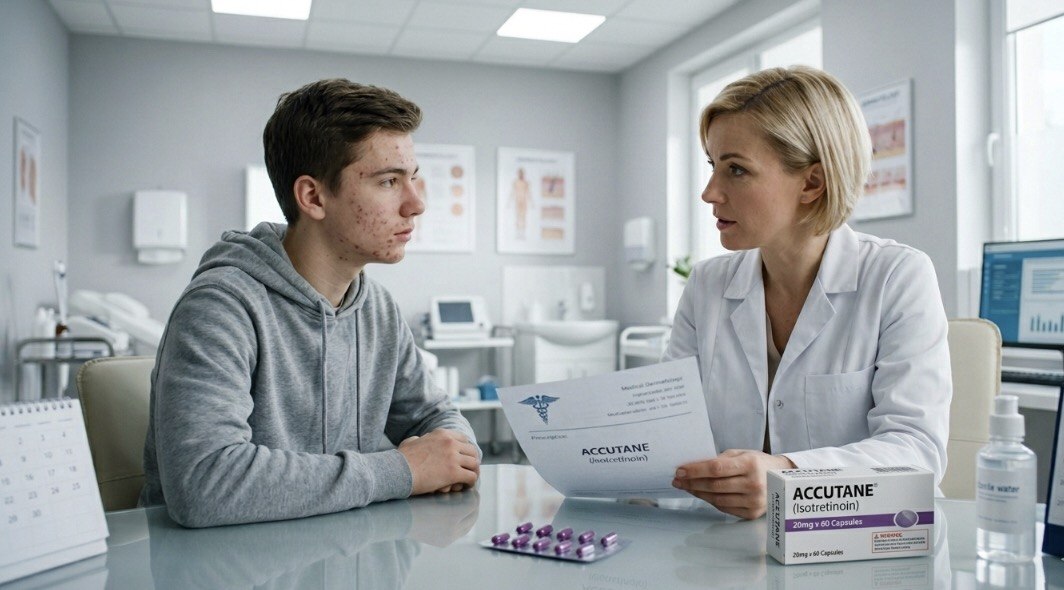
The biggest update is not a single miracle medication. It is the way severe acne is being managed after the latest guideline shift and safety updates. In 2026, severe acne treatment is more combination-based, more anti-antibiotic-overuse, and more willing to escalate when the clinical picture clearly supports it. That means several practical changes.
First, guideline-based care now strongly favors combining mechanisms of action instead of relying on one product at a time. Topical retinoids, benzoyl peroxide, and other agents are used more strategically, often with maintenance in mind from the beginning. Second, oral antibiotics are being used more carefully and for shorter, more purposeful intervals, almost always with benzoyl peroxide and topical therapy rather than as a loose long-term fix. Third, clinicians are more comfortable moving to isotretinoin when severe acne is scarring, psychologically burdensome, or not responding to standard therapy.
There are also 2026 safety workflow changes around isotretinoin in the United States. FDA-approved REMS modifications are designed to reduce unnecessary burden while keeping pregnancy prevention rules in place. During and after treatment, some pregnancy testing can now be done outside a medical setting if the prescriber allows it, although pretreatment pregnancy tests still need to be completed in a medical setting. There is also more flexibility if a prescription is not picked up within the seven-day window. Those are not cosmetic updates. They directly affect how easy or difficult it is for eligible patients to stay on treatment.
Another practical shift is the ongoing move toward more selective lab monitoring in otherwise healthy patients. The modern discussion is less about routine monthly blanket testing for everyone and more about choosing meaningful labs at the right times, then individualizing the plan if the patient has risk factors, higher doses, relevant medical history, or abnormal results.
Finally, “what’s new” in 2026 also includes more conversation around emerging non-pharmacologic options such as sebaceous-gland-targeting lasers and microbiome-focused approaches. These are worth watching, but they are not the same as saying they have replaced isotretinoin or standard medical therapy. For severe acne, first-line decision making is still dominated by proven topical combinations, systemic therapy when needed, and scar-conscious escalation.
The modern treatment ladder for severe acne
Severe acne treatment works best when it is built as a system, not as a random stack of products. A dermatologist usually thinks in layers: unclog the follicle, reduce inflammation, control Cutibacterium acnes activity without encouraging resistance, lower oil-driven disease activity when relevant, prevent scarring, and preserve long-term control after the acute phase improves.
For many patients, treatment starts with a topical retinoid plus benzoyl peroxide, even when oral therapy will also be used. That is because topical retinoids help normalize follicular turnover, treat microcomedones, and support maintenance once the severe flare is under control. Benzoyl peroxide helps reduce bacterial load without driving the same resistance concerns associated with antibiotic monotherapy. In severe acne, topicals are rarely enough by themselves, but they remain part of the backbone.
When systemic therapy is needed, oral antibiotics can still have a role, especially when inflammatory lesions are prominent and isotretinoin is not the immediate next step. But the 2026 mindset is clear: antibiotics are a bridge, not a lifestyle. They should not quietly become an open-ended plan. The longer acne smolders, the more time it has to scar.
Hormonal therapy also matters more than many readers realize, especially in female patients with jawline acne, flares around the menstrual cycle, adult persistent acne, or signs that androgens are part of the pattern. Spironolactone and combined oral contraceptives remain important options in the right clinical setting. They are not replacements for isotretinoin in every severe case, but they can be valuable alone or in combination depending on the pattern of disease.
Where isotretinoin fits in 2026
Isotretinoin remains the most important systemic option for severe acne because it addresses acne at a deeper biological level than most other therapies. It reduces sebum production, changes follicular keratinization, lowers inflammatory activity, and indirectly alters the environment that allows acne-driving bacteria to thrive. In plain English, it does not just calm breakouts for a few weeks. It can push the disease into long-term remission.
That is why Accutane is still the benchmark treatment for severe nodular acne. It is also why clinicians may recommend it for acne that is causing scars, major psychosocial burden, or repeated treatment failure even if the lesion count alone does not look dramatic in a photo.
In 2026, one of the most important ideas is that isotretinoin should not be viewed as the “last desperate option” after every other plan has dragged on for too long. Used appropriately, it can be the scar-prevention decision rather than the fallback decision. Delaying effective treatment sometimes costs more than the medicine itself ever would, especially when permanent textural scars and prolonged pigment changes are left behind.
Who may be a candidate for Accutane or isotretinoin?
A dermatologist may consider isotretinoin when acne is severe, nodular, cystic, widespread, treatment-resistant, rapidly scarring, or causing substantial emotional distress. It may also be appropriate when truncal acne is severe, when repeated oral antibiotic courses have not produced durable control, or when the disease rebounds quickly as soon as standard treatment stops.
Some readers think Accutane is only for teenagers with extreme cystic acne. That is outdated. Adults with persistent, scarring acne may also be strong candidates. What matters most is not age alone, but severity, chronicity, scarring risk, prior treatment response, and the safety profile for that individual patient.
How isotretinoin treatment usually works
Most isotretinoin courses are measured over months, not days. Treatment plans vary by clinician, body weight, acne severity, tolerability, relapse risk, and whether the goal is a standard or modified cumulative dose strategy. Some dermatologists prefer a more gradual ramp-up to improve tolerability. Others use a more conventional dosing structure. In practice, there is no single universal script that fits every patient.
What patients notice first is usually dryness. Lips become dry, skin becomes more sensitive, and the “oil slick” feeling that often defines severe acne begins to fade. That change is part of why the drug works, but it is also why supportive skin care matters so much during treatment.
Improvement does not always look linear. Some patients flare early. Some improve steadily. Some clear on the face before the trunk. The real point is that isotretinoin is a monitored medical treatment, not a casual skincare experiment. Success usually depends on staying consistent, using the right moisturizers and lip care, attending follow-up visits, and reporting side effects early instead of trying to tough them out in silence.
What side effects matter most?
The most common adverse effects are mucocutaneous. Dry lips, dry skin, dry eyes, nasal dryness, and temporary skin sensitivity are common enough that patients should expect them rather than feel blindsided. Many also report that their skin becomes easier to irritate with harsh cleansers, scrubs, waxing, or aggressive exfoliating products. During treatment, a boring routine is usually a smart routine.
There are also important but less common medical concerns that make supervision necessary. Isotretinoin has a well-known teratogenic risk, which is why pregnancy prevention requirements are strict. Lipid and liver enzyme changes can occur. Musculoskeletal symptoms, headaches, visual symptoms, and mood changes are also issues that need prompt discussion if they appear. The right approach is not fear-mongering and not hand-waving. It is informed monitoring.
Readers also deserve a clear, honest point here: isotretinoin should never be bought casually online or taken without proper supervision. That shortcut can turn a high-value treatment into a dangerous one very quickly.
What changed with iPLEDGE and isotretinoin safety in 2026?
The 2026 REMS update matters because it affects access. FDA-approved changes reduce administrative friction while keeping the pregnancy risk controls intact. For patients who can become pregnant, pretreatment pregnancy tests still need to happen in a medical setting. During and after treatment, however, a prescriber may allow pregnancy testing outside a medical setting, including home testing. That can make follow-up logistics more manageable for some patients.
Another meaningful change is that if a patient who can become pregnant misses the seven-day prescription pickup window, a repeat pregnancy test may be done immediately without the old extra waiting burden. For patients who cannot get pregnant, the system has also been simplified in specific ways, including less repetitive documentation and removal of the old thirty-day prescription window. These changes do not make isotretinoin casual. They make the safety system less clumsy.
What about lab monitoring in 2026?
Lab monitoring is still part of isotretinoin care, but the all-purpose monthly lab panel for every healthy patient is no longer treated as sacred. The more current approach is selective and individualized. In otherwise healthy patients, many acne experts support checking alanine aminotransferase and triglycerides at baseline and again around peak dose rather than ordering large routine panels every month without a clear reason.
That does not mean every patient should get the same minimal workup. Monitoring changes when the patient has metabolic risk factors, preexisting liver or lipid issues, interacting medications, higher-risk symptoms, abnormal baseline results, or other medical reasons for closer follow-up. The real 2026 lesson is that good monitoring is thoughtful, not reflexive.
Supportive skin care during isotretinoin treatment
Skincare advice during isotretinoin should be simple enough to follow on the worst dry-skin week. That usually means a gentle cleanser, a plain moisturizer, a lip balm used early and often, and daily sunscreen. Harsh acne washes, toners that sting, grainy scrubs, overuse of salicylic acid, and “deep cleaning” habits usually make treatment less tolerable, not more effective.
Many patients also need practical guidance on shaving, exercise-related dryness, contact lens discomfort, and temporary changes in skin texture. This part is underrated. When supportive care is ignored, people assume the medication is unbearable. When supportive care is handled well, the course often becomes much more manageable.
What about new topical and adjunctive options?
Even in a conversation dominated by isotretinoin, it is a mistake to ignore the broader therapeutic landscape. In 2026, topical clascoterone, azelaic acid, salicylic acid, and modern retinoids such as trifarotene are part of a more flexible acne toolkit. These options can be especially useful when acne has a hormonal component, when truncal disease is present, when pigment concerns matter, or when the goal is to build a maintenance routine after systemic control has been achieved.
This is also where clinicians are getting smarter about transition phases. A patient may need isotretinoin to shut down severe disease, but maintenance afterward still matters. The post-isotretinoin period is where relapse prevention, barrier repair, and realistic long-term skincare become more important than dramatic short-term routines.
Are lasers, light devices, and microbiome therapies ready for prime time?

This is where the internet often runs ahead of the evidence. Device-based and microbiome-oriented acne treatments are among the most interesting areas in 2026, but interesting does not automatically mean first-line. Some sebaceous-gland-targeting laser approaches have shown promising results in moderate-to-severe acne, and microbiome modulation is being studied as a way to reduce reliance on antibiotics. Those trends are worth watching.
At the same time, guideline-level evidence for many procedures is still limited. That means these options may be useful in selected cases, but they should not be marketed as universal replacements for evidence-based medical care. For a reader trying to decide what to do with severe, scarring acne right now, the most dependable answer is still structured medical treatment, not trend-chasing.
How dermatologists think about relapse and long-term control
One of the most practical questions in acne care is not “How do I clear up in six weeks?” It is “How do I stay better?” Relapse risk depends on age, acne pattern, severity, hormonal drivers, treatment adherence, and whether the disease was truly controlled or only temporarily suppressed.
That is why 2026 acne care emphasizes maintenance earlier. Topical retinoids often remain central after improvement. Benzoyl peroxide may still have a role in select cases. Hormonal therapy may continue when endocrine drivers are important. And patients who finish isotretinoin still need a realistic skin plan, not a rebound into random over-the-counter experimentation.
The bottom line
The severe acne story in 2026 is not about abandoning old treatments. It is about using the right ones sooner, more precisely, and with less wasted time. Topical combinations matter. Antibiotics still have a role, but a narrower one. Hormonal therapy is valuable in the right pattern. And isotretinoin, the medication many people still call Accutane, remains the treatment that changes the trajectory of truly severe acne more than anything else.
The newer developments are important because they improve how treatment is delivered. The updated guideline framework pushes clinicians toward combination therapy and away from prolonged antibiotic dependence. The 2026 iPLEDGE changes reduce some access barriers while keeping core safety protections in place. Emerging laser and microbiome strategies are promising, but they remain adjunctive or developing rather than replacements for proven care.
For readers, the simplest takeaway is this: severe acne should be treated like a condition with scar potential, not like a cosmetic inconvenience. The longer effective treatment is delayed, the more expensive the skin may become in the long run.
FAQ
Is Accutane the same thing as isotretinoin?
Accutane is the older brand name many people still use conversationally, but isotretinoin is the generic drug name. In the United States, Accutane is not currently marketed, although other isotretinoin products are available.
Is isotretinoin still the best treatment for severe acne in 2026?
For severe nodular, scarring, or treatment-resistant acne, isotretinoin remains the benchmark systemic treatment because it can induce prolonged remission and reduce future scar burden.
Are antibiotics enough for severe acne?
Sometimes they help temporarily, but they are usually not the best long-term answer for severe acne. Current practice strongly favors limiting antibiotic exposure and combining antibiotics with benzoyl peroxide and topical therapy.
Can adults take isotretinoin?
Yes. Adult patients with severe, persistent, or scarring acne may be appropriate candidates. Treatment decisions depend on the clinical picture and safety considerations, not age alone.
Do all isotretinoin patients need monthly lab tests?
Not necessarily. Monitoring is increasingly individualized, especially in otherwise healthy patients, though clinicians may still order more frequent tests when risk factors or abnormal findings are present.
What is the biggest safety issue with isotretinoin?
The most critical issue is pregnancy risk because isotretinoin is teratogenic. That is why the REMS process and pregnancy testing rules remain a central part of treatment safety.
Can severe acne be treated without isotretinoin?
Sometimes yes, especially when the acne pattern is hormonally driven or responds to combination therapy. But when acne is scarring, nodular, or repeatedly resistant, isotretinoin often becomes the most effective option.
Are new laser treatments replacing isotretinoin?
No. Some newer lasers show promise, but they have not replaced isotretinoin as the standard high-impact systemic treatment for severe acne.
Main Sources:
American Academy of Dermatology 2024 acne guideline update,
FDA isotretinoin safety information current in February 2026,
iPLEDGE REMS updates,
JAMA Dermatology consensus data on isotretinoin laboratory monitoring,
PubMed recent literature on emerging acne therapies.